Top 10 Space Exploration Destinations to Discover

Space exploration has always captured the human imagination. From the first moon landing to the latest Mars rover missions, the quest to understand the universe continues to inspire scientists, engineers, and dreamers alike. As technology advances, we are now on the brink of exploring new frontiers beyond our planet. Here are the top 10 space exploration destinations that are set to redefine our understanding of the cosmos.
1. Mars
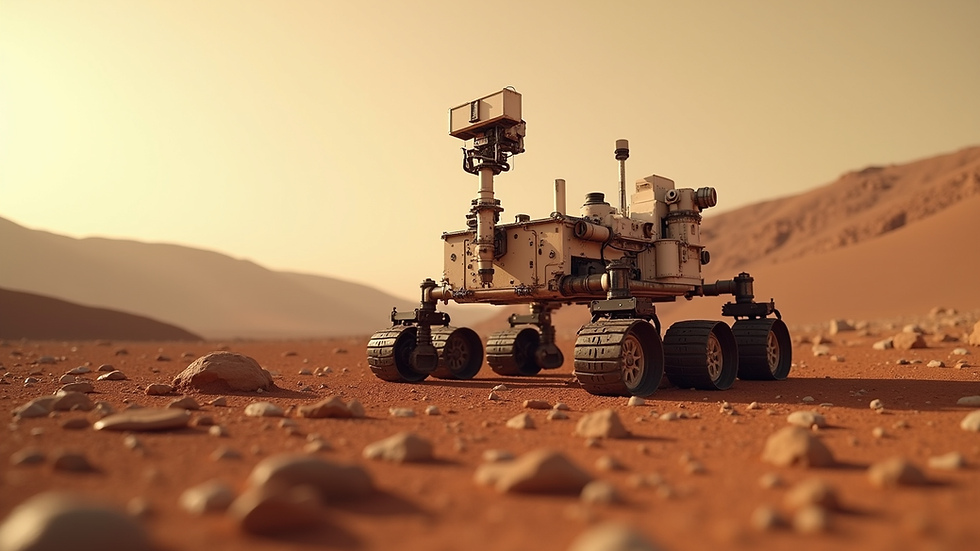
Mars has long been the focal point of space exploration. Its similarities to Earth make it a prime candidate for future colonization. NASA's Perseverance rover, which landed in February 2021, is currently searching for signs of ancient life and collecting samples for future return to Earth. The potential for human missions to Mars is being actively researched, with plans for crewed missions possibly occurring in the 2030s.
Why Mars?
Potential for Life: Evidence suggests that Mars once had liquid water on its surface, raising the possibility of past life.
Human Colonization: With advancements in technology, establishing a human presence on Mars is becoming more feasible.
2. The Moon
The Moon is not just Earth's satellite; it is a stepping stone for deeper space exploration. NASA's Artemis program aims to return humans to the Moon by 2024, with plans to establish a sustainable presence by the end of the decade. The Moon's resources, such as water ice, could support future missions to Mars and beyond.
Key Highlights
Lunar South Pole: This region is of particular interest due to the presence of water ice, which could be used for life support and fuel.
International Collaboration: Various countries are planning missions to the Moon, fostering global cooperation in space exploration.
3. Europa
Europa, one of Jupiter's moons, is a prime candidate in the search for extraterrestrial life. Beneath its icy surface lies a vast ocean of liquid water, making it one of the most intriguing places in our solar system.
Exploration Plans
Europa Clipper Mission: Scheduled for launch in the 2020s, this NASA mission will conduct detailed reconnaissance of Europa's ice shell and subsurface ocean.
Potential for Life: The ocean may harbor conditions suitable for life, making Europa a key target for astrobiology.
4. Titan
Titan, Saturn's largest moon, is unique due to its dense atmosphere and liquid methane lakes. This intriguing environment presents a different kind of exploration opportunity.
Why Explore Titan?
Organic Chemistry: Titan's atmosphere contains complex organic molecules, which could provide insights into the building blocks of life.
Potential for Future Missions: Concepts for landers and drones are being developed to explore Titan's surface and atmosphere.
5. Enceladus
Another of Saturn's moons, Enceladus, has gained attention for its geysers that eject water vapor and organic compounds into space. This suggests that a subsurface ocean exists, making it another candidate in the search for life.
Exploration Opportunities
Cassini Mission Discoveries: The Cassini spacecraft provided valuable data about Enceladus, revealing its potential habitability.
Future Missions: Proposals for missions to sample the plumes are being considered to analyze their composition.
6. Venus
Venus, often called Earth's twin, has a hostile environment with extreme temperatures and pressure. However, recent studies suggest that there may be microbial life in its upper atmosphere.
Key Points
Cloud Chemistry: The discovery of phosphine in Venus's atmosphere raises questions about potential life forms.
Exploration Missions: NASA's DAVINCI+ and VERITAS missions aim to study Venus's atmosphere and geology in the coming years.
7. The Asteroid Belt
The asteroid belt between Mars and Jupiter is a treasure trove of resources. Missions to asteroids can provide insights into the early solar system and the building blocks of planets.
Notable Missions
OSIRIS-REx: This NASA mission successfully collected samples from the asteroid Bennu and is set to return them to Earth in 2023.
Future Prospects: The potential for mining asteroids for resources is being explored, which could support space missions.
8. The Kuiper Belt
Beyond Neptune lies the Kuiper Belt, home to many icy bodies, including dwarf planets like Pluto. This region is largely unexplored and holds clues to the solar system's formation.
Exploration Highlights
New Horizons Mission: This spacecraft provided the first close-up images of Pluto and is now exploring other Kuiper Belt objects.
Future Missions: More missions are needed to study the diverse objects in this distant region.
9. Exoplanets
The discovery of exoplanets—planets outside our solar system—has revolutionized our understanding of the universe. Thousands of these planets have been identified, some in the habitable zone where conditions may support life.
Exploration Efforts
Kepler and TESS Missions: These telescopes have identified numerous exoplanets, expanding our knowledge of planetary systems.
James Webb Space Telescope: Launched in December 2021, this telescope will study the atmospheres of exoplanets for signs of habitability.
10. The International Space Station (ISS)
The ISS serves as a unique laboratory for scientific research in microgravity. It is a collaborative effort involving multiple countries and provides valuable insights into living and working in space.
Research Opportunities
Microgravity Experiments: Research conducted on the ISS has implications for medicine, materials science, and fundamental physics.
Future of Human Spaceflight: The ISS is a platform for testing technologies and systems for future deep space missions.
Conclusion
As we look to the stars, the possibilities for exploration are endless. Each of these destinations offers unique opportunities to expand our understanding of the universe and our place within it. Whether it's the icy moons of Jupiter and Saturn or the distant reaches of the Kuiper Belt, the quest for knowledge drives humanity forward.
The future of space exploration is bright, and as technology continues to advance, we are closer than ever to uncovering the mysteries of the cosmos. So, keep your eyes on the skies and stay tuned for the next chapter in humanity's journey into space.

Comments